A summer capsule wardrobe makes getting dressed easier by bringing together a small collection of clothes that work well together. Instead of buying a new outfit for every occasion, you choose versatile tops, bottoms, shoes, and lightweight layers that you can wear in different ways.
You can start with around 15–25 pieces, but there is no required number. Your ideal wardrobe depends on your daily routine, local weather, workplace dress code, personal style, and laundry habits. The easiest approach is to use clothes you already own, identify what is missing, and buy only items that help create more outfits.
Short Definition
A summer capsule wardrobe is a small, coordinated collection of warm-weather clothes that mix and match for different occasions. Build yours around existing items, compatible colors, comfortable fabrics, and only the pieces you actually need.
Experience
Before shopping, choose three items from your existing wardrobe and try creating different outfits with them. Check which pieces work together and identify any genuine gaps before spending money on new clothes.
Summer Capsule Wardrobe Checklist
Use this checklist to plan a flexible summer wardrobe without buying every item.
- T-shirts and versatile tops
- Shorts, jeans, or lightweight trousers
- Dresses or skirts, if preferred
- Lightweight layers for cooler evenings or air-conditioned spaces
- Comfortable everyday shoes
- Useful accessories, such as sunglasses and a practical bag
- A color palette that works with existing clothes
- A shopping list based on genuine wardrobe gaps
How to use it: Start with items you already own. Add only the pieces that suit your climate, personal style, budget, and daily activities.
What Is a Summer Capsule Wardrobe?
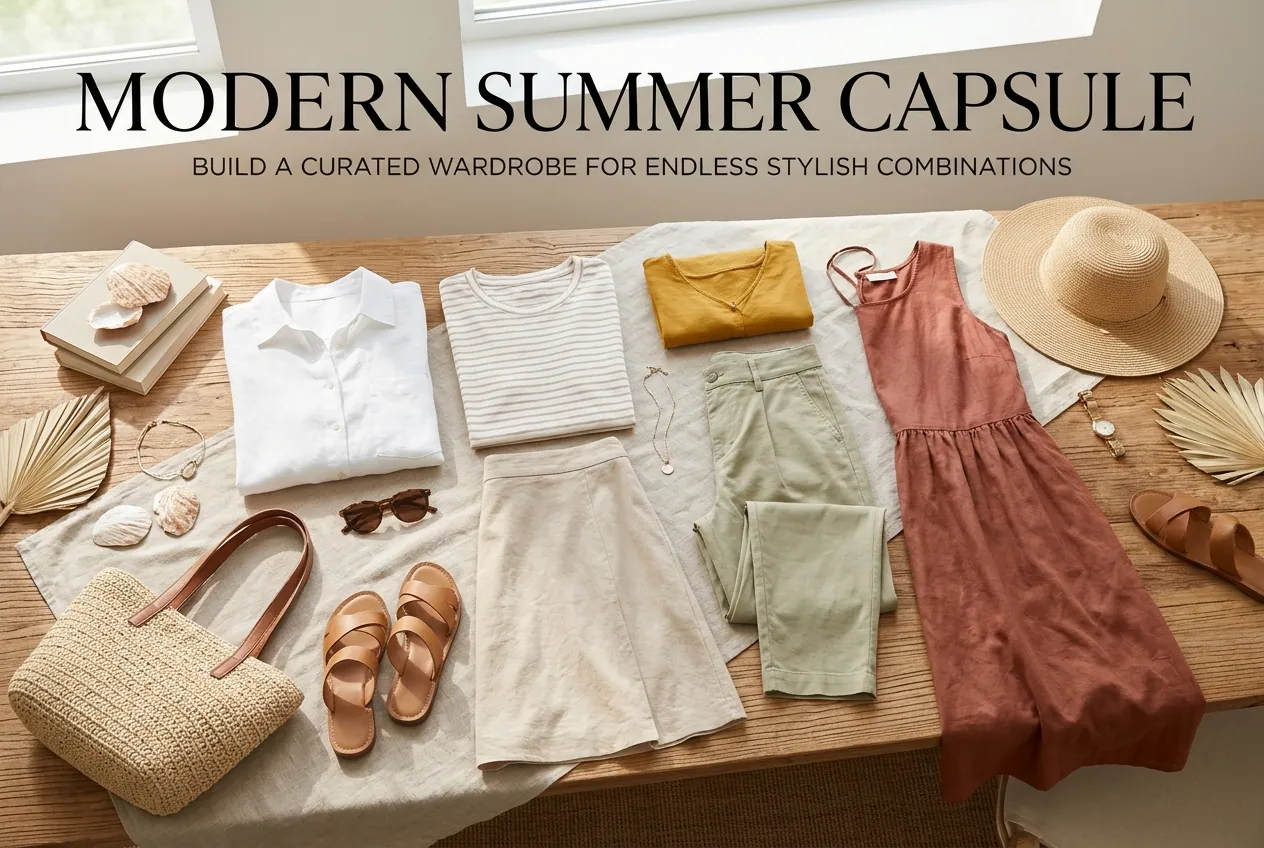
A summer capsule wardrobe is a selected group of clothing items that you can mix and match to create different outfits throughout the season. The pieces usually share compatible colors, fit your lifestyle, and work for several occasions.
For example, a white T-shirt might work with denim shorts for a casual day, linen trousers for a lunch outing, or a skirt for a more polished look. One lightweight button-down shirt might also serve as a regular shirt, an open layer over a tank top, or a cover-up for a beach trip.
The main goal is not to own as few clothes as possible. It is to make better use of the clothes you have.
A summer capsule wardrobe may include:
- Lightweight T-shirts, tank tops, and casual shirts.
- Shorts, jeans, skirts, and breathable trousers.
- Dresses or other one-piece outfits, if you wear them.
- Lightweight jackets or shirts for cooler evenings.
- Comfortable sandals, sneakers, or dress shoes.
- A few useful accessories, such as sunglasses, belts, and bags.
You do not need every item on this list. Someone who works from home may need more casual clothing, while someone who works in an office may need more polished outfits. A traveler may prefer clothes that pack easily and work for several activities.
How to Build a Summer Capsule Wardrobe Step by Step
The best way to build a summer capsule wardrobe is to plan around your actual needs rather than copying another person’s shopping list.
Step 1: Start With the Clothes You Already Own
Before buying anything, look through your wardrobe. Take out the summer clothes you wear regularly, including your favorite tops, bottoms, dresses, and shoes.
Ask yourself a few simple questions:
- Which clothes do I wear most often?
- Which pieces are comfortable in warm weather?
- Which items can I combine with several other pieces?
- Do I need more clothes for work, weekends, or travel?
- Are any items damaged, uncomfortable, or difficult to care for?
Separate useful clothes from items that no longer fit your needs. You do not have to discard something simply because it is not trendy. A well-fitting shirt that works with several outfits may be more valuable than a new seasonal purchase.
Next, write down the gaps you notice. For example, you might already own several tops and dresses but have only one pair of comfortable everyday shoes.
That gives you a clear shopping priority instead of a long list of things you do not really need.
Step 2: Choose a Simple Color Palette

A color palette is a small group of colors that work well together. It can make a capsule wardrobe easier to coordinate because more of your clothes will match.
Start with two or three colors you already enjoy wearing. You might choose white, navy, and beige, or black, cream, and olive green. Then add one accent color if you want more variety.
An accent color is a shade that adds interest to your main colors. Blue, coral, burgundy, or soft pink can work, depending on your preferences.
Here is one example:
| Clothing item | Example color |
| T-shirts and tank tops | White and cream |
| Everyday trousers | Navy |
| Shorts | Beige |
| Lightweight shirt | Light blue |
| Dress or skirt | Navy or a preferred accent color |
| Shoes | White, tan, or another versatile shade |
These colors are suggestions, not rules. You can build an equally useful wardrobe around brighter colors, prints, or darker shades.
Before buying a new item, check whether it works with at least two or three pieces you already own. If it only matches one outfit, consider whether that limited use is worth the cost.
Step 3: Plan Outfits Before Shopping
A wardrobe can contain plenty of clothes and still feel difficult to use. The problem may be that the pieces do not work well together.
Try creating a few outfits with what you already have. Pair a T-shirt with your trousers, then try the same top with shorts or a skirt. Add your usual shoes and any layer you might need.
For example, a white T-shirt, navy trousers, and comfortable sandals can create a simple daytime outfit. The same trousers may work with a button-down shirt and loafers for a more polished setting.
You can also create a basic outfit list on your phone. Record combinations that work well so you can find them quickly on busy mornings.
You do not need to make every outfit look completely different. Repeating useful combinations is part of the point. Changing shoes, accessories, or a top can add variety without requiring an entirely new outfit.
Step 4: Buy Only the Missing Pieces
Once you know which outfits you can already create, decide which purchases would make the biggest difference.
Suppose you have several tops and two pairs of shorts but no lightweight trousers for air-conditioned offices or cooler evenings. A pair of trousers that works with your existing shirts may be more useful than another casual top.
Before making a purchase, check the garment’s fabric, fit, care instructions, and price. Think about how often you expect to wear it and whether it suits more than one part of your routine.
If your wardrobe works well with only a few additions, stop there. A capsule wardrobe does not need to reach a particular number of pieces to be useful.
Summer Capsule Wardrobe Checklist: What to Include
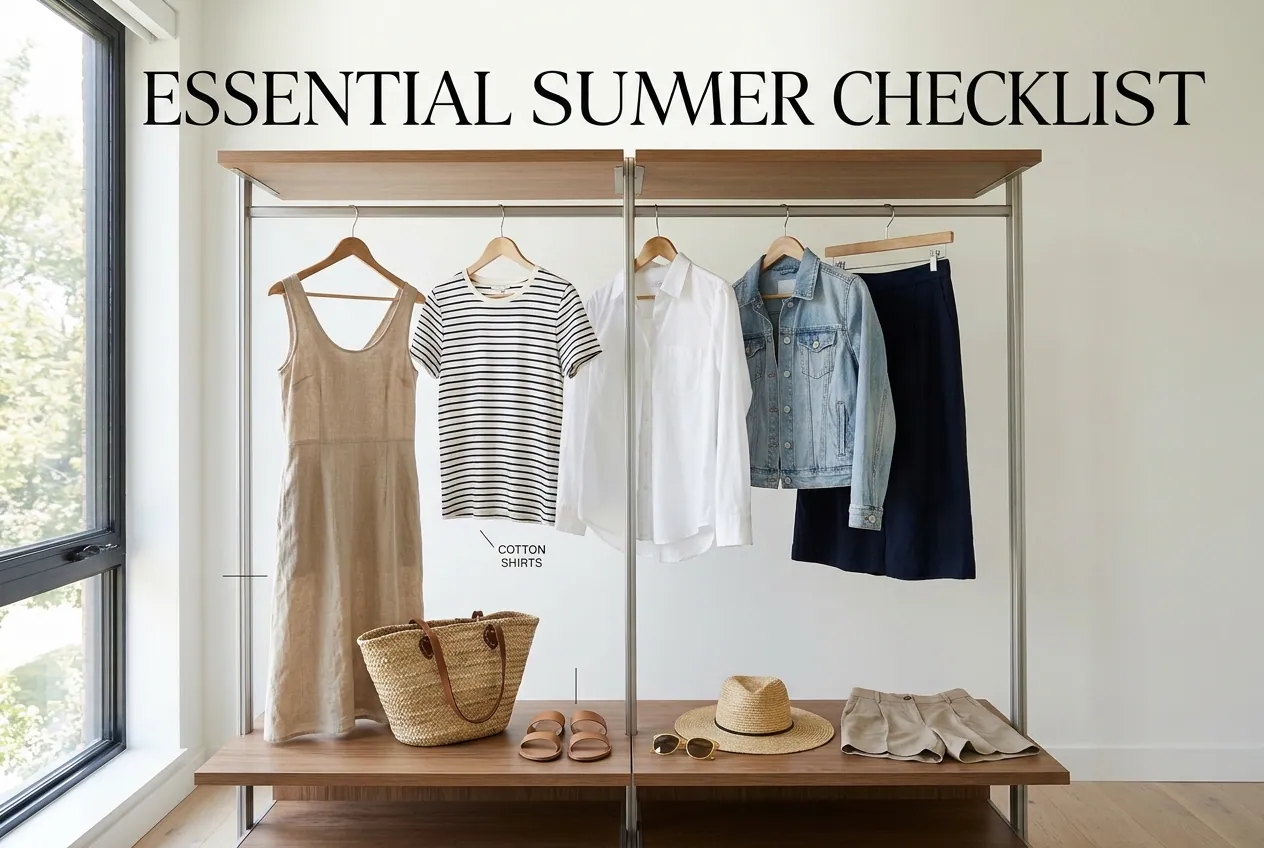
Use this checklist as a starting point. Choose the items that suit your climate, work requirements, preferred style, and daily activities.
1. Tops
Tops often form the foundation of a summer wardrobe because they can be paired with several bottoms.
Useful options include:
- White or neutral T-shirt: Easy to combine with shorts, jeans, trousers, and skirts.
- Tank top or sleeveless top: Useful for hot days or for wearing under another shirt.
- Casual colored T-shirt: Adds variety without requiring a completely different outfit.
- Button-down shirt: Works on its own or as a lightweight layer over a tank top.
- Polished top or polo: Useful for casual workplaces, lunches, and other occasions that call for a neater appearance.
You do not need several versions of the same top unless you wear them frequently or need extra options between laundry days.
2. Bottoms
Choose bottoms that complement your tops and feel comfortable when you sit, walk, and spend time outdoors.
Consider these options:
- Denim shorts: Suitable for many casual settings.
- Tailored shorts or Bermuda shorts: An alternative when you prefer a more structured look.
- Everyday jeans: Useful for cooler days and indoor spaces.
- Lightweight trousers: Helpful for work, travel, and evenings when shorts are not practical.
- A skirt: Optional for anyone who enjoys wearing skirts and wants another outfit combination.
You do not have to include every style. A person who rarely wears jeans may get more use from lightweight trousers, while someone who spends most of the summer outdoors may prefer shorts.
3. Dresses and One-Piece Outfits
A dress can simplify outfit planning because the top and bottom are already combined. However, dresses are optional rather than essential.
Useful choices include a casual cotton dress, a midi dress, or a more polished design for social occasions. A midi dress generally falls around the middle of the lower leg, although the exact length varies.
Choose an option that works with your preferred shoes and any layer you might need. If you rarely wear dresses, use the same wardrobe space for an item that fits your routine better.
4. Lightweight Layers
Summer does not always mean wearing the same light clothing all day. Indoor air conditioning, evening weather, and some workplaces may call for an additional layer.
Consider a lightweight button-down shirt, a light cardigan, an unlined blazer, or a denim jacket. Choose based on the temperature and dress code you actually face.
A shirt that works over a tank top and with trousers may offer more value than a jacket you wear only once or twice.
5. Shoes and Accessories
Shoes need to match both your outfits and your activities. Accessories can add variety without requiring many additional clothes.
A practical starting selection might include:
- Comfortable walking sneakers.
- Flat sandals or another warm-weather shoe you find comfortable.
- Loafers or dress shoes, if your work or social activities require them.
- Sunglasses.
- A bag that fits your everyday needs.
- A belt, jewelry, or another accessory you regularly wear.
You do not need several pairs of shoes for a basic summer capsule wardrobe. Choose footwear that works with enough outfits to justify the space and cost.
How to Choose Summer Colors and Fabrics
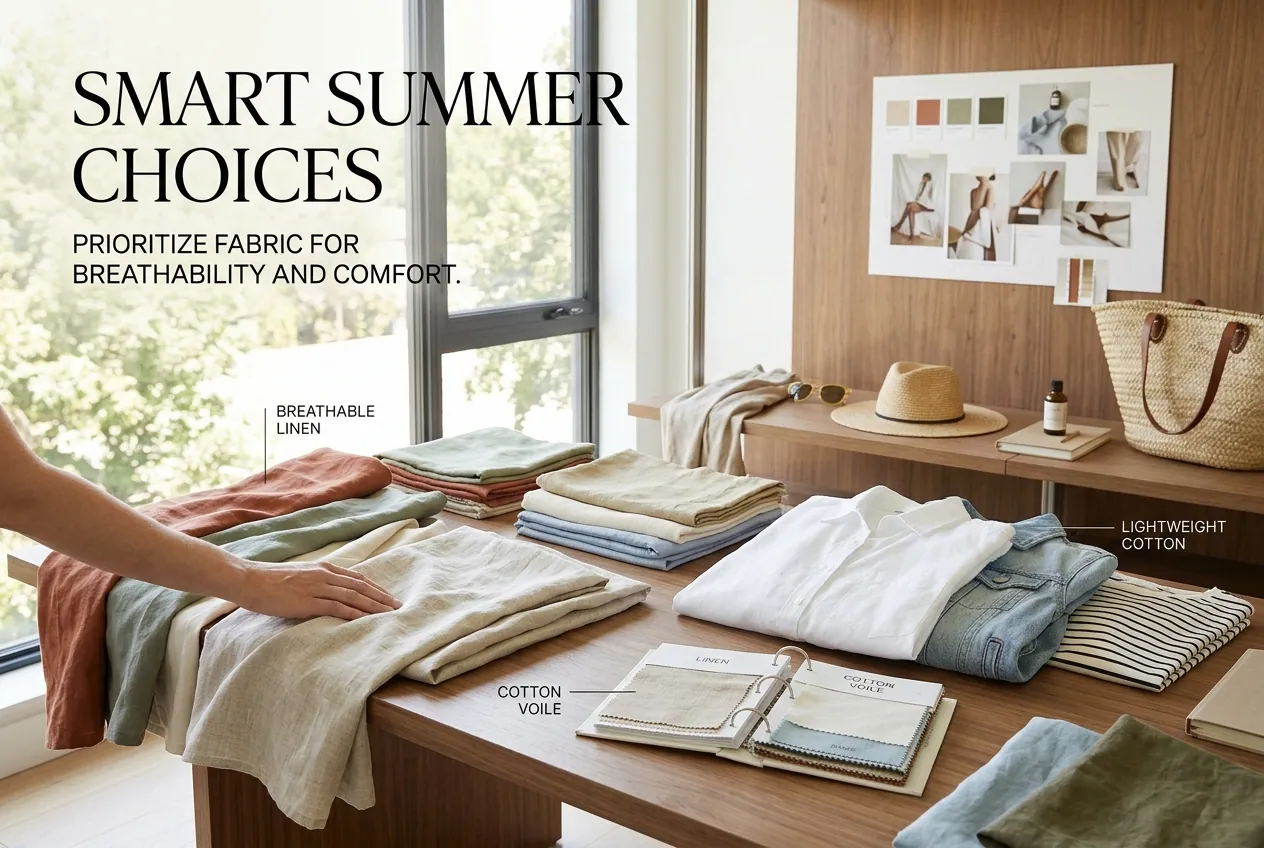
Color coordination helps your outfits work together, but fabric choice also matters. A piece may look suitable for summer yet feel uncomfortable in the weather or require more care than you want to manage.
Pick Colors That Work Together
If you find matching difficult, start with a simple color combination. Navy, white, and beige are one option. Black, white, and olive are another.
You can also include prints. A striped shirt, for example, may work well with plain trousers or shorts. The key is to check which colors in the print match your existing clothes.
You do not need to follow seasonal color trends to build a useful capsule wardrobe. Choose shades you like and feel comfortable wearing.
Compare Cotton, Linen, and Blended Fabrics
Cotton and linen are common choices for summer clothing, but they do not behave exactly the same way.
| Fabric | Potential benefits | What to consider |
| Cotton | Available in many garment styles and can absorb moisture | Some cotton garments wrinkle, shrink, or feel heavy, depending on construction and care. |
| Linen | Often valued for its lightweight feel and distinctive texture | It can crease easily, and the garment’s weave and weight affect how it feels. |
| Cotton-linen blend | Combines cotton and linen in one fabric | Its feel, drape, and maintenance depend on the proportions and construction. |
| Lightweight synthetic blend | May offer useful stretch, durability, or easier care in some garments | Comfort and moisture handling depend on the fiber type, fabric structure, and fit. |
Cotton’s fiber properties are discussed in Cotton Incorporated’s textile reference. For actual shopping, check the fiber content and care instructions on the garment rather than assuming every item made from the same fiber will feel the same.
Linen is one option for warm-weather shirts and trousers. For example, UNIQLO’s US Premium Linen Shirt is listed as 100% linen, with a relaxed fit. The product page also notes that the white version is slightly sheer. That is a useful reminder to check details such as fabric opacity, fit, and color before buying.
No single fabric is the right choice for everyone. Your comfort may depend on the garment’s weight, weave, lining, cut, and the conditions in which you wear it.
Check Care Instructions Before You Buy
Clothing maintenance affects how practical an item will be over time. A shirt that requires special care may be less convenient than a machine-washable alternative if you have a busy routine.
In the United States, the Federal Trade Commission provides guidance on clothing fiber content and care labeling through its Clothing and Textiles resources.
Before buying, check:
- The listed fiber content.
- The garment’s washing and drying instructions.
- Whether it requires ironing or another form of care.
- How it feels and moves when you try it on.
- Whether the fabric is sufficiently opaque for your intended use.
These small checks help you choose clothes that are not only attractive but also practical to maintain.
Summer Capsule Wardrobe Ideas for Women and Men

The same capsule wardrobe principles can work across different styles. The exact clothing list should depend on what you enjoy wearing and where you plan to wear it.
Summer Capsule Wardrobe for Women
A women’s summer capsule wardrobe might combine T-shirts, tank tops, a button-down shirt, lightweight trousers, denim shorts, a skirt, and one or two dresses.
For example, imagine you choose a white T-shirt, blue shirt, navy trousers, beige shorts, and a simple midi dress.
You could create these combinations:
- White T-shirt, beige shorts, and sneakers for a casual day.
- Blue shirt, navy trousers, and sandals for a lunch outing.
- Midi dress and flat sandals for a social occasion.
- White T-shirt, navy trousers, and a lightweight shirt for a cooler evening.
These are illustrative combinations, not a required shopping list. You can replace skirts and dresses with trousers or shorts if those better suit your style.
Men’s Summer Capsule Wardrobe
A men’s summer capsule wardrobe might include T-shirts, polos, a lightweight button-down shirt, shorts, casual trousers, sneakers, and sandals.
Here are a few ways to combine them:
- Plain T-shirt, shorts, and sneakers for everyday wear.
- Polo shirt, lightweight trousers, and loafers for a smart-casual setting.
- Linen shirt, shorts, and sandals for a relaxed outing.
- Button-down shirt, trousers, and suitable dress shoes for a more polished occasion.
Adjust the items to your lifestyle. Someone who spends most days in casual clothing may need more T-shirts and shorts, while an office worker may need additional shirts and trousers.
How to Adapt Your Wardrobe After 40 or 50
Your age does not determine which clothes you can wear. A useful summer capsule wardrobe should reflect your preferences, comfort, fit, and activities rather than a fixed set of age-based rules.
If you prefer more coverage, you could choose longer shorts, lightweight trousers, midi skirts, or loose shirts. If you prefer fitted clothing, you can use the same capsule principles with cuts that suit your taste.
For readers over 40 or 50, the practical questions remain the same:
- Does the garment fit the way you prefer?
- Can you move comfortably in it?
- Does it work with your existing shoes and tops?
- Is it suitable for the occasions when you expect to wear it?
- Can you maintain it without extra effort you do not want?
A capsule wardrobe should support your personal style, not replace it with someone else’s idea of how a particular age group should dress.
How to Plan Summer Work and Travel Outfits
A wardrobe built only for casual days may not cover every summer activity. You can avoid unnecessary purchases by identifying the occasions that need different clothing.
Summer Work Capsule Wardrobe
For an office, consider which clothing meets the workplace dress code. Depending on the setting, useful options might include lightweight trousers, polished tops, suitable dresses, loafers, and a light layer for air-conditioned rooms.
For example, a button-down shirt and tailored trousers may work with loafers for a smart-casual office. The same trousers may also work with a simple T-shirt on a more relaxed day.
Do not assume every workplace accepts shorts, sleeveless tops, or casual sandals. Check your actual dress code before building your work capsule.
Summer Travel and Vacation Capsule Wardrobe
Travel clothing needs to match your destination, planned activities, and available luggage space.
Choose pieces that can serve more than one purpose. A button-down shirt might work for sightseeing, dinner, or as a light cover-up. Trousers that pair with both casual and polished tops can also reduce the number of items you need.
The REI guide to packing light discusses planning and choosing clothing with more than one use in mind.
Before packing, check your destination’s expected weather, any dress requirements, and how often you will have access to laundry. A beach trip, city vacation, and business trip may require quite different clothing selections.
How to Build an Affordable Summer Capsule Wardrobe
A capsule wardrobe can help you organize your clothes, but it does not automatically save money. The savings depend on whether it changes your shopping habits and helps you use what you already own.
Start with three simple steps:
- Set a budget. Decide how much you can comfortably spend without treating every checklist item as a requirement.
- Prioritize missing essentials. Focus on items that help create more outfits or meet a specific work, comfort, or travel need.
- Compare the full cost. Check the price, care needs, expected use, and whether the garment works with your existing clothes
For a current price reference, the US UNIQLO product page lists its women’s Premium Linen Shirt at $49.90 as checked on October 21, 2026. This is one product listing, not a typical market price or a full wardrobe budget. Prices and availability can change.
You can also think about cost per wear. This means dividing an item’s purchase price by the number of times you expect to wear it.
For example, suppose a hypothetical $40 shirt is worn 20 times. Its cost per wear would be $2:
$40 ÷ 20 wears = $2 per wear.
This calculation is only an estimate. It does not include taxes, maintenance, or other costs, and it cannot predict how long the shirt will last.
The useful question is not simply whether an item is cheap. It is whether you will wear it enough, whether it meets your needs, and whether the cost fits your budget.
Common Summer Capsule Wardrobe Mistakes
A few avoidable mistakes can make a capsule wardrobe less useful.
Buying too many new items. You may already own most of what you need. Review your wardrobe before shopping.
Choosing colors that do not work together. Before buying, picture the new item with several pieces you already own. If it fits only one outfit, think carefully about its value.
Ignoring comfort. A garment that looks good but feels uncomfortable during your normal activities may remain unused. Check fit, movement, and fabric before buying.
Following a fixed item count. You do not need to own exactly 15, 20, or 25 pieces. Your wardrobe should reflect your actual routine.
Forgetting maintenance. Clothes that require extra care may create ongoing effort or costs. Read the label before making a purchase.
Trying to eliminate outfit repetition. You can wear the same useful combinations regularly. Accessories, a different top, or another pair of shoes can add variety when you want it.
Frequently Asked Questions
1. How Many Pieces Should a Summer Capsule Wardrobe Have?
Around 15–25 pieces can be a useful starting point, but no fixed number suits everyone. The right count depends on your daily activities, climate, laundry schedule, and existing clothes. Start with the items you wear regularly and add only what you need.
2. What Are the Essential Pieces in a Summer Capsule Wardrobe?
Common starting pieces include versatile T-shirts, a button-down shirt, suitable bottoms, comfortable shoes, and a lightweight layer. Dresses, skirts, polos, and other items depend on your preferences. Choose pieces that combine easily and suit your daily routine.
3. How Can You Build a Summer Capsule Wardrobe on a Budget?
Review your existing clothes, plan outfits, and write down genuine gaps before shopping. Prioritize items that work with several pieces you already own. Compare prices, fabric, fit, and care needs instead of buying everything on a capsule checklist.
4. What Fabrics Are Good for a Summer Capsule Wardrobe?
Cotton, linen, and some lightweight blends are common warm-weather options. Their comfort depends on the fabric’s weight, weave, fit, and construction. Check the garment’s fiber content and care instructions, and choose what feels comfortable for your climate and routine.
5. How Do You Create a Summer Capsule Wardrobe for Work or Travel?
For work, start with your workplace dress code and select tops, bottoms, shoes, and layers that meet it. For travel, consider destination weather, activities, laundry access, and luggage space. In both cases, choose versatile items that work in more than one outfit.
Start With What You Own
You do not need a completely new wardrobe to get dressed more easily this summer. Start by reviewing the clothes you already wear, choosing compatible colors, and creating a few outfits that fit your daily life.
Then identify the missing pieces that would make your wardrobe more useful. Whether you need lightweight trousers for work, comfortable shoes for travel, or a few tops that match your existing clothes, make each purchase for a clear reason.
A good summer capsule wardrobe is not about owning the fewest clothes. It is about having practical options you enjoy wearing and can use in different ways throughout the season.
Disclaimer
This article provides general fashion and wardrobe-planning information. Clothing preferences, comfort, budgets, body shapes, and local weather vary, so choose items that suit your individual needs. Results will vary depending on your wardrobe, lifestyle, and personal preferences.