How do you become a better person when you know you cannot get everything right? The answer is to focus on personal growth instead of trying to become flawless. You can improve your character, develop healthy habits, treat people with respect, and learn from your mistakes without expecting perfection from yourself.
Being a better person does not mean having perfect behavior every day. It means making thoughtful choices, taking responsibility for your actions, and becoming more aware of how you affect yourself and others. Small improvements in your everyday decisions can help you build a more meaningful and balanced life.
You do not need to change your entire personality overnight. Start by understanding your values, identifying areas where you want to improve, and choosing actions you can repeat. Here are practical ways to become a better person without putting unnecessary pressure on yourself.
Short Definition
Becoming a better person means developing good character, building healthy habits, treating others with respect, and learning from mistakes. It is about consistent personal growth, not achieving complete perfection.
Practical Insight Box
Choose one behavior you want to improve, such as listening patiently or managing your responsibilities. Practice it in everyday situations and review your progress weekly. Remember, missing a day does not mean you have failed.
Personal Growth Checklist: 7 Simple Ways to Become a Better Person
Use this checklist to practice positive changes in everyday life.
| No. | Action | What to Practice |
| 1 | Understand yourself | Identify your strengths and weaknesses. |
| 2 | Practice honesty | Be truthful and keep realistic promises. |
| 3 | Show kindness | Treat others with care and respect. |
| 4 | Build good habits | Choose small, repeatable daily actions. |
| 5 | Accept mistakes | Take responsibility and learn from them. |
| 6 | Improve relationships | Listen carefully and respect boundaries. |
| 7 | Review your progress | Notice improvements and identify your next goal. |
Remember: You do not need to complete everything perfectly. Focus on making realistic improvements over time.
Can Anyone Become Completely Perfect?
No one can become completely perfect because every person has limitations, makes mistakes, and has areas where they can improve. Perfection also means different things to different people. What one person considers perfect may not match another person’s expectations.
For example, imagine two students preparing for an important exam. One studies every evening, follows a schedule, and earns a good grade. The other studies at different times but understands the subject well and balances school with other responsibilities. Both can be responsible students, even though their routines are different.
This example shows why perfection is not a useful way to measure someone’s worth.
Understand the Difference Between Perfection and Progress
Perfection means expecting something to be completely free from mistakes or weaknesses. Progress means making improvements over time, even when you do not get everything right.
These two approaches can lead to very different experiences.
When you focus on perfection, you might:
- Spend too much time checking small details.
- Avoid trying something because you fear failure.
- Feel disappointed when your results are not exactly as expected.
- Compare yourself with people who appear more successful.
- Ignore your achievements because you notice only what went wrong.
When you focus on progress, you can recognize your efforts, learn from mistakes, and make changes when something does not work.
The Centre for Clinical Interventions explains that having high standards is not automatically harmful. The problem can develop when those standards become so demanding that they negatively affect everyday life. Its perfectionism resources explain how people can work toward healthier standards without giving up on their goals.
Perfectionism Resources for Clinicians
The important lesson is simple: Keep standards that help you grow, but let go of expectations that make you feel you must never make a mistake.
What Does Being a Better Person Really Mean?
Being a better person means developing qualities and behaviors that support your well-being and help you treat others fairly. It is not about having the perfect appearance, earning the most money, receiving approval from everyone, or always being right.
It is more about the choices you make when dealing with everyday situations.
For example, imagine a friend shares something personal with you. You can respect their privacy instead of sharing their information with other people. Similarly, when you make a mistake at work, you can admit what happened and help find a solution rather than blaming someone else.
These actions may seem small, but they show honesty, respect, and responsibility.
Understand Your Personal Values
Personal values are the principles and beliefs that guide what matters to you. They can include honesty, family, kindness, education, respect, independence, and personal development.
Understanding your values can help you make decisions that match the kind of person you want to become.
Start by asking yourself a few questions:
- What qualities do I respect in other people?
- What kind of behavior do I want to show in difficult situations?
- Which parts of my life need more attention?
- Am I making decisions because they matter to me or because I want approval?
- What do I want people to be able to trust me with?
Write down three to five values that matter most to you. You do not need to choose values that sound impressive. Select the ones you genuinely want to practice.
The University of Edinburgh’s reflection toolkit provides guidance on understanding your strengths, weaknesses, and values through self-reflection.
Why Your Actions Matter More Than Your Image
Looking like a good person and behaving like one are not always the same.
For example, someone may talk about the importance of kindness but regularly speak disrespectfully to others. Another person may not talk much about kindness but consistently helps people when they need support.
Your everyday actions provide a more useful way to understand your character than appearances or public approval.
Instead of asking whether everyone thinks you are a good person, ask whether your decisions reflect the values you want to follow.
What Qualities Make Someone a Good Person?
A good person is not someone who has every positive quality all the time. It is someone who makes an effort to develop good character and apply it in everyday situations.
The following qualities can help you build better relationships, make thoughtful decisions, and become more responsible.
1. Honesty and Integrity
Honesty means telling the truth and avoiding deliberate deception. Integrity means trying to follow your values even when nobody is watching.
These qualities help people know they can trust you.
For example, imagine you make an error in a report at work. You might feel tempted to hide it because you are worried about criticism. However, telling the truth gives you and your team a chance to correct the problem.
You can practice honesty by:
- Giving truthful answers instead of making excuses.
- Keeping promises you can realistically fulfill.
- Admitting when you do not know something.
- Avoiding gossip and misleading information.
- Following through on your responsibilities.
Honesty does not mean sharing every private thought with everyone. You can be truthful while respecting your own privacy and the privacy of others.
2. Kindness and Empathy
Kindness means treating people with care and consideration. Empathy means trying to understand another person’s feelings or point of view.
You do not have to agree with someone to treat them respectfully.
For example, a colleague may seem quiet during a meeting. Instead of immediately assuming they are unfriendly, consider that they might be dealing with a difficult situation or may simply prefer listening.
You can show kindness through small actions:
- Listen when someone needs to talk.
- Avoid making fun of another person’s difficulties.
- Offer help when it is appropriate.
- Use respectful language, even during disagreements.
- Recognize the effort someone has made.
Kindness also includes how you treat yourself. You can recognize your mistakes without using insulting or hurtful language toward yourself.
3. Responsibility and Accountability
Responsibility means taking care of your duties. Accountability means accepting your part in the results of your decisions and actions.
Suppose you agree to complete a task by Friday but forget to finish it. Blaming your workload alone does not solve the problem.
A more responsible response is to acknowledge the missed deadline, explain the situation honestly, and discuss how you can complete the work.
Practice accountability by:
- Completing commitments when possible.
- Informing people when you cannot meet an agreement.
- Accepting the consequences of your decisions.
- Correcting mistakes instead of hiding them.
- Learning from situations that did not go well.
Being responsible does not mean accepting blame for things outside your control. It means understanding which parts of a situation are yours to manage.
4. Respect and Reliability
Respect means recognizing that other people have their own opinions, needs, boundaries, and experiences.
Reliability means making an honest effort to do what you say you will do.
For example, arriving at an agreed meeting time, responding to important messages, and respecting another person’s decision are simple ways to show these qualities.
You can develop them by:
- Giving people your attention when they speak.
- Avoiding unnecessary interruptions.
- Respecting different opinions.
- Keeping realistic commitments.
- Communicating when plans change.
You do not have to agree with everyone. Respect means you can disagree without treating another person unfairly.
5. Patience and Self-Control
Patience helps you handle situations that require time. Self-control helps you manage your reactions instead of responding to every emotion immediately.
Imagine someone criticizes your work. Your first reaction might be to become defensive. Taking a moment before responding can help you understand whether the feedback contains something useful.
You can practice patience by:
- Taking time before making important decisions.
- Avoiding arguments when emotions are high.
- Listening before responding.
- Accepting that some results take time.
- Recognizing when a break would help.
These qualities do not mean you should tolerate disrespect or remain silent when something is wrong. You can be patient while still expressing your concerns clearly.
How to Improve Yourself Through Daily Habits

You do not need a completely new lifestyle to become a better person. Start with a few useful habits that support the changes you want to make.
Daily habits matter because they give you regular opportunities to practice your values. However, repeating an action does not require following an exact schedule every day.
Start With Small, Realistic Changes
Trying to change too many things at once can make your routine difficult to maintain.
Suppose you want to become more organized. You might decide to wake up earlier, exercise, read, study, clean your room, and plan your entire day immediately.
That is a lot of change to manage at once.
A smaller starting point could be:
- Spend five minutes planning your main priorities.
- Put important items back in their proper places.
- Complete one task before starting an unnecessary new one.
- Review what you need to do tomorrow.
- Choose actions that fit your actual responsibilities and available time.
Build Consistency Instead of Chasing Perfect Results
Consistency means returning to useful actions regularly. It does not mean performing every action perfectly.
For example, suppose you want to develop a reading habit. You might plan to read for 15 minutes each evening. Some days you may manage the full time, while other days you may read only a few pages.
A shorter session can still keep you connected to your goal.
Research on habit formation shows that the time needed to develop a habit differs between people and behaviors. A 2024 systematic review covering 20 studies and 2,601 participants found substantial variation in habit formation times. It does not support a fixed timeline that works for everyone.
The useful lesson is to choose a realistic action, repeat it when possible, and adjust your plan when necessary.
Create a Simple Daily Routine
A simple routine can help you manage your responsibilities without making your day feel unnecessarily complicated.
Here is an illustrative daily routine:
| Part of the day | Possible action | Purpose |
| Morning | Identify your main priorities | Start with direction |
| During the day | Complete important responsibilities | Practice reliability |
| Afternoon | Check unfinished tasks | Adjust your plans |
| Evening | Spend time with family or friends | Maintain relationships |
| Before bed | Reflect on one useful lesson | Build self-awareness |
You do not need to follow this exact schedule. Your work hours, family responsibilities, health, and personal preferences may require a different routine.
You can also explore our guide on what being disciplined means. It explains how realistic habits, self-control, and consistent actions support everyday responsibilities.
How to Develop a Healthier Mindset
Your mindset affects how you respond to challenges, mistakes, and personal expectations. A healthier mindset does not mean thinking positively all the time. It means approaching situations realistically and allowing yourself room to learn.
Understand Your Strengths and Weaknesses
Self-awareness means understanding your behavior, feelings, abilities, and areas that need improvement.
Start by identifying what you already do well.
For example, you may be reliable at work but struggle to express your opinions during meetings. Recognizing both sides gives you a clearer starting point.
Try this simple exercise:
| Question | Example answer |
| What am I good at? | Completing tasks on time |
| What needs improvement? | Speaking with more confidence |
| What situations challenge me? | Sharing ideas in group meetings |
| What can I practice? | Preparing one point before each meeting |
Your answers do not need to be permanent labels. People can develop new skills and change their behavior with time.
The University of Edinburgh’s self-awareness activities provide additional reflection questions to help people examine their strengths, weaknesses, and behavior.
Be Kinder to Yourself
Many people are more forgiving toward others than they are toward themselves.
For example, if a friend makes a small mistake, you might tell them that everyone makes mistakes and they can try again. But when you make a similar mistake, you may criticize yourself for the rest of the day.
Self-compassion means treating yourself with understanding during difficult situations instead of responding with unnecessary self-judgment.
It does not mean ignoring your responsibilities or pretending that every decision is acceptable.
You can practice it by:
- Recognizing that making mistakes is part of being human.
- Speaking to yourself in a fair and respectful way.
- Accepting difficult feelings without letting them control every decision.
- Taking a useful action after recognizing a mistake.
Psychologist Kristin Neff’s review, Self-Compassion: Theory, Method, Research, and Intervention, discusses self-kindness, common humanity, and mindfulness as key parts of self-compassion.
Set Realistic Expectations
Having goals is useful, but your expectations should match your circumstances.
For example, someone who works full-time and manages family responsibilities may not have the same free time as someone with fewer daily commitments.
Comparing their schedules may create unnecessary frustration.
Before setting a goal, consider:
- Why is this goal important to me?
- What time and resources do I have?
- What steps will help me reach it?
- What obstacles could make it difficult?
- How will I recognize progress?
The University of Edinburgh’s goal-setting guide recommends considering importance, specificity, realistic planning, obstacles, and timing when developing goals.
A realistic goal gives you direction without requiring you to ignore your everyday needs.
How to Handle Mistakes Without Giving Up
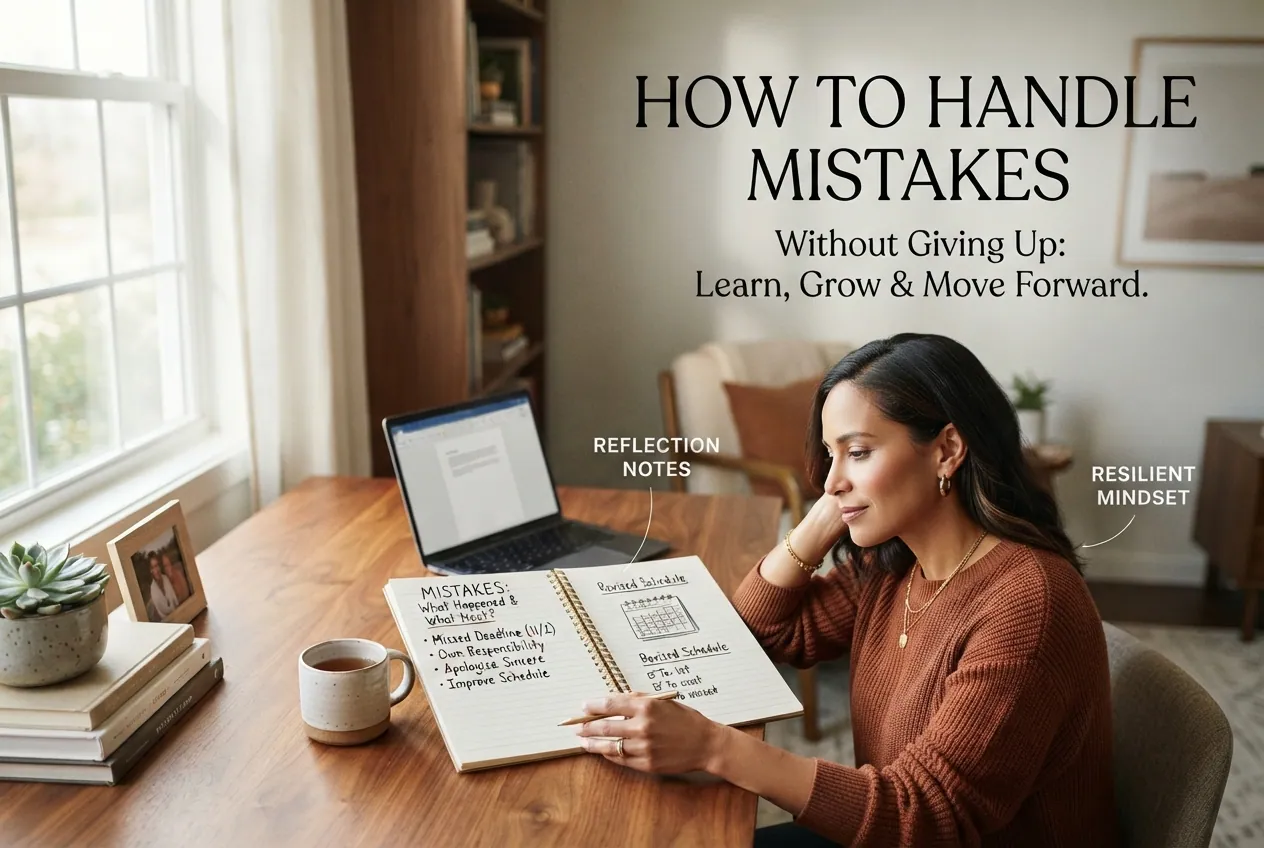
Mistakes are part of learning and making decisions. Becoming a better person does not mean avoiding every mistake. It means responding to mistakes honestly and making an effort to improve your future behavior.
Accept Your Mistakes
The first step is recognizing what happened without immediately making excuses.
Imagine you promised to help a family member but forgot because you were busy with other responsibilities.
You can acknowledge that you forgot instead of pretending the agreement never happened.
Accepting a mistake allows you to understand the situation more clearly.
Take Responsibility for Your Actions
After recognizing a mistake, consider whether another person was affected.
If you hurt someone’s feelings, a sincere apology may be more useful than a long explanation of why you behaved that way.
A meaningful apology generally includes:
- Recognizing what you did.
- Acknowledging the effect on the other person.
- Expressing genuine regret.
- Taking responsibility without shifting blame.
- Making a reasonable effort to avoid repeating the behavior.
Remember that an apology does not guarantee immediate forgiveness. The other person has the right to respond in their own time.
Learn and Make a Better Choice Next Time
A mistake becomes a useful learning opportunity when you identify what needs to change.
Ask yourself:
- What happened?
- What was my responsibility?
- What could I have handled differently?
- What action can I take now?
- What will I do if a similar situation happens again?
For example, if you regularly miss important deadlines, you might need a more realistic schedule or a better reminder system.
Do not use one mistake as proof that you cannot improve. Focus on the next action you can control.
How to Become a Better Person in Your Relationships
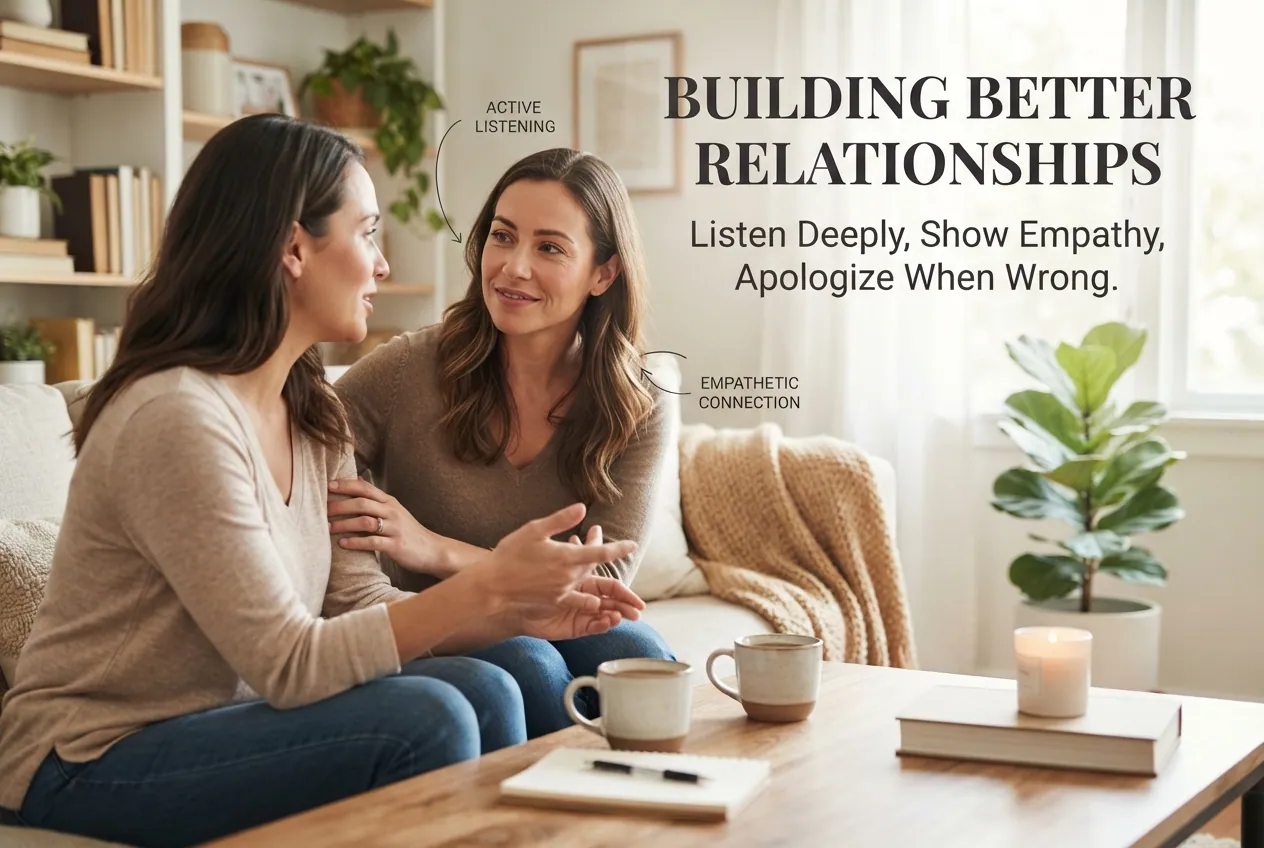
Personal growth is not only about improving yourself. It also involves learning how your words and actions affect people around you.
Your relationships with family, friends, coworkers, and other people provide regular opportunities to practice respect, patience, empathy, and communication.
Learn to Listen Without Judging
Listening means giving another person the chance to explain what they think or feel.
Sometimes people need to be heard before they are ready to receive advice.
For example, if a friend tells you about a difficult day, avoid immediately interrupting with your own story. Give them time to explain what happened.
You can show that you are listening by:
- Giving the person your attention.
- Asking questions when something is unclear.
- Avoiding unnecessary interruptions.
- Summarizing what you understood.
- Allowing different opinions without immediately arguing.
The University of California, Berkeley’s active-listening practice describes ways to improve understanding through paraphrasing, asking questions, expressing empathy, and avoiding judgment.
Show Respect and Empathy
People have different experiences, expectations, and preferences. Treating everyone exactly the same does not always mean understanding what each person needs.
For example, a coworker may prefer written instructions, while another may understand a task better through a conversation.
Respecting these differences can make communication easier.
You can also show respect by allowing people to express their opinions, honoring reasonable boundaries, and avoiding comments that unnecessarily embarrass them.
Apologize When You Are Wrong
A genuine apology can help repair trust after a disagreement or misunderstanding.
However, apologizing only to end an argument is not the same as accepting responsibility.
When you apologize, be specific about what you did. Avoid adding statements that shift the blame back to the other person.
For example, saying, “I’m sorry I interrupted you. I should have let you finish speaking,” is more meaningful than saying, “I’m sorry you got upset.”
Maintain Healthy Boundaries
Being a good person does not mean agreeing to every request.
Boundaries are limits that help protect your time, energy, privacy, and personal well-being.
For example, you may care about a friend but still be unable to answer phone calls during working hours.
You can express this respectfully:
“I want to hear about what’s happening, but I’m busy right now. Can we talk this evening?”
Helping others is valuable, but you should not have to ignore every personal need to prove that you care.
How to Balance Personal Goals and Everyday Responsibilities
Personal improvement should support your everyday life, not make it harder to manage.
You may have responsibilities involving work, education, family, finances, or relationships. Your goals need to fit around these commitments.
Identify Your Most Important Priorities
Start by separating important responsibilities from activities that can wait.
For example:
| Priority | Example | Suggested approach |
| High | Preparing for tomorrow’s deadline | Give it attention first |
| Medium | Organizing personal documents | Schedule it |
| Low | Rearranging an already organized space | Do it when convenient |
These are hypothetical examples, not fixed rules for every situation.
Choose priorities based on actual deadlines, consequences, and personal responsibilities.
Our guide on how to manage multiple tasks without feeling overwhelmed explains practical ways to organize responsibilities and make realistic plans.
Avoid Comparing Your Progress With Others
Comparison can make you feel that you are falling behind, even when you are making meaningful improvements.
For example, someone may have more work experience, a different education, or fewer personal responsibilities than you.
Their current results do not tell you everything about their circumstances.
Instead of asking why you are not at the same stage, ask what you can learn from their approach.
You can admire another person’s success without using it as a reason to disrespect your own progress.
Give Yourself Time to Improve
Personal growth takes practice.
You may understand what you need to change but still find it difficult to apply that lesson immediately.
For example, knowing that you should remain calm during disagreements does not mean you will always respond calmly.
What matters is recognizing the pattern and working toward a more thoughtful response.
Allow yourself to improve gradually. A realistic pace is usually more useful than an intense plan that you cannot maintain.
Common Mistakes That Make Personal Growth Harder
Trying to improve yourself can become frustrating when you use methods that create unnecessary pressure.
Avoid these common mistakes:
- Trying to please everyone: Different people have different expectations. You cannot satisfy every person without sometimes ignoring your own needs and values.
- Expecting instant results: New habits and better communication skills require practice. Give yourself enough time to learn.
- Comparing yourself constantly: Another person’s achievements do not determine your personal worth or potential.
- Giving up after one bad day: Missing a habit once does not mean your entire effort has failed. Return to your routine when you can.
- Overthinking every decision: Not every choice needs hours of research or repeated checking. Give more attention to decisions with meaningful consequences.
- Ignoring your own needs: Constantly helping others while neglecting rest and personal responsibilities can make your routine difficult to maintain.
- Treating mistakes as personal failure: A poor decision identifies something you may need to change. It does not automatically define your entire character.
The Centre for Clinical Interventions discusses several patterns that can maintain perfectionism, including unhelpful thinking, excessive achievement pressure, and behaviors that keep people stuck. Its guidance can help readers understand why reducing unrealistic standards does not mean giving up on improvement.
Perfectionism Resources for Clinicians
How to Recognize Your Personal Growth
Personal growth is not always visible through major achievements. Sometimes it appears in small changes in how you think, communicate, and handle everyday situations.
You can use simple reflection questions to notice these changes.
Notice Changes in Your Everyday Behavior
Think about situations that used to be difficult for you.
Perhaps you now listen more carefully during disagreements, manage your time more effectively, or admit mistakes instead of avoiding responsibility.
These changes can be signs of progress.
You can also notice whether you are becoming more thoughtful about your decisions and more consistent with your commitments.
Review Your Habits and Decisions
Set aside a little time each week to review your actions.
Ask yourself:
- What did I handle well this week?
- Where could I have made a better decision?
- Did I treat people with respect?
- Which habit helped me most?
- What is one thing I want to improve next week?
Write down a few short answers. You do not need a complicated journal or tracking system.
The purpose is to understand your behavior and identify a useful next step.
Celebrate Small Improvements Without Expecting Perfection
Recognizing progress can help you stay connected to your goals.
For example, you might notice that you completed a task before its deadline, handled a difficult conversation more calmly, or followed through on a promise.
These actions deserve recognition.
Celebrating progress does not mean ignoring areas that still need work. It means recognizing that improvement can happen even when some things remain unfinished.
You do not need to become a completely different person to build a more meaningful life. You can start by making one better decision at a time.
Frequently Asked Questions
1. Can Anyone Become a Perfect Human Being?
No one can become completely perfect because human beings have limitations, different abilities, and changing circumstances. Everyone makes mistakes and has areas for improvement. A more realistic goal is to develop good character, improve your habits, and make thoughtful decisions.
2. What’s Better Than Being Perfect?
Becoming a better version of yourself is more useful than chasing perfection. It allows you to learn from mistakes, develop your strengths, and maintain realistic expectations. Progress also gives you room to grow without expecting flawless results.
3. What Qualities Make Someone a Good Person?
Important qualities include honesty, kindness, empathy, respect, responsibility, patience, and reliability. These qualities become meaningful when you apply them through everyday actions, such as keeping promises, listening to others, and accepting responsibility for mistakes.
4. How Can I Stop Expecting Perfection From Myself?
Start by recognizing when your expectations are unrealistic. Focus on what you can control, set manageable goals, and allow yourself to make mistakes. When something goes wrong, identify what you can learn instead of criticizing yourself endlessly.
5. How Do I Become a Better Version of Myself?
Begin by understanding your values and identifying one area you want to improve. Choose a realistic habit, practice it regularly, and review your progress. You can also work on your communication, responsibilities, relationships, and ability to learn from mistakes.
Final Thoughts on Becoming a Better Person
Becoming a better person is not about reaching a point where you never make mistakes. It is about developing good character, understanding your responsibilities, and making thoughtful choices in everyday life.
Start with one quality or habit you want to improve. Practice it in realistic situations, learn from setbacks, and recognize the progress you make along the way.
You do not need to be perfect to live a meaningful life. You need room to learn, the willingness to improve, and the patience to keep moving forward.
Disclaimer
People’s values, circumstances, preferences, and needs differ, so these suggestions may not produce the same results for everyone. This article provides general lifestyle information and does not replace personalized mental health care; consider qualified professional support if perfection-related pressure seriously affects your everyday life.